The Cap and the Headwear
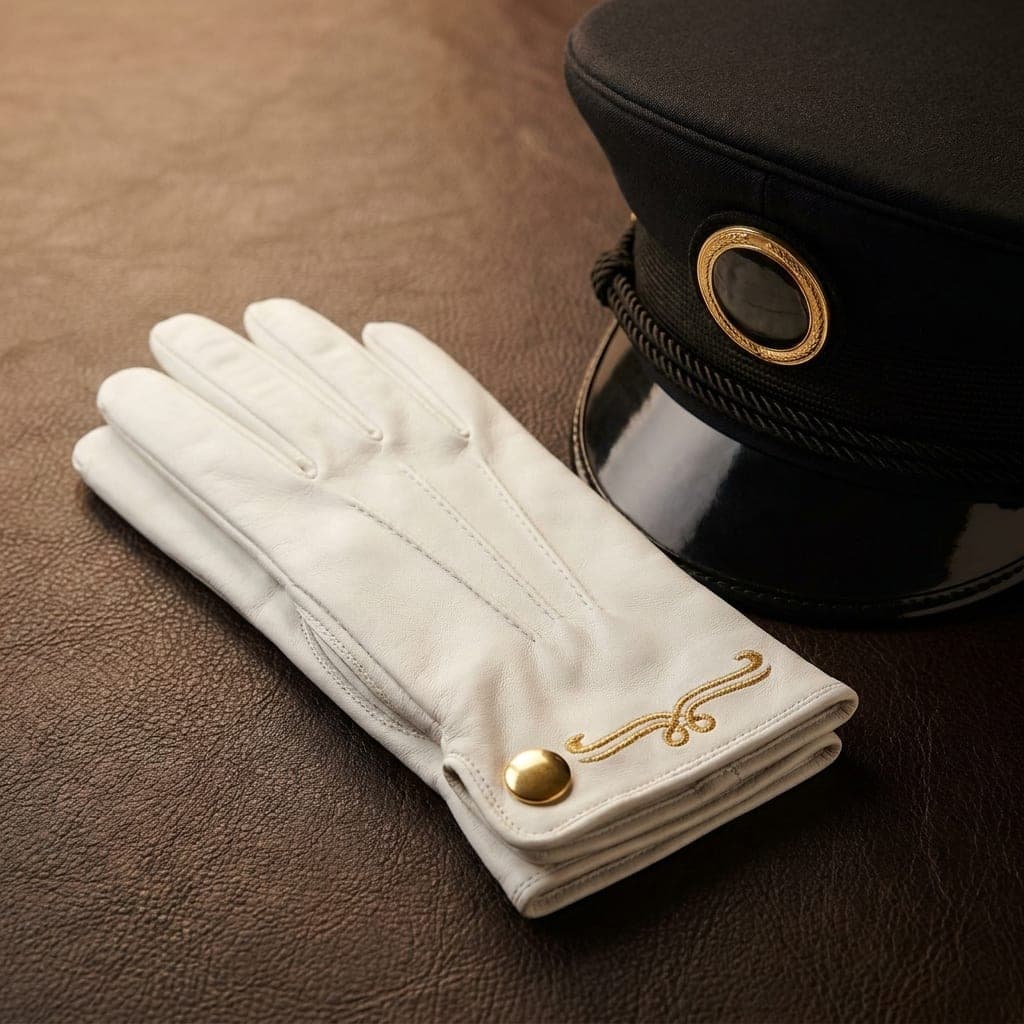
Of all the pieces that dress the excellence of service, the cap asks the least and says the most. A visor, a band, a discreet half-sun. Set level on the brow, it completes the bearing and names the role before a single word is spoken: a small crown, sober and exact.
A Form Before a Word
A cap is read before it is seen. From across a courtyard, before a face resolves, the eye recognises the line of a visor and understands its meaning at once: someone is here to serve, and to serve well. This is the cap's quiet office. It does not announce; it confirms. The band sits true, the crown holds its shape, the demi-soleil rests where it belongs, neither displayed nor hidden, merely present. Worn level, never tilted, it lends the head a calm geometry that the rest of the bearing then answers. Posture follows the brim. The whole figure composes itself around an inch of felt and a clean horizontal line.
Blocked, Lined, Finished
Fine making begins on the block. The crown is shaped over a wooden form, steamed and eased until it takes a memory of its curve and keeps it. The visor is built to hold a single faithful line: firm enough to read, supple enough to live a working day. Inside, a lining is set by hand, a sweatband stitched to sit kindly against the brow through long hours and changing weather. Seams are closed flat; the edge of the visor is bound without a thread out of place. Nothing here is decoration. Each operation answers a demand of wear, so the cap arrives complete and asks nothing more of the one who puts it on.
The Tradition, Raised
The chauffeur's cap is an old form with an honest pedigree, born of the road and the early houses of grande remise. Haute mesure takes that inheritance and raises it, without altering its grammar. Proportions are measured to the head, not approximated; materials are chosen for how they age rather than how they gleam. The half-sun is placed with restraint, a signature meant to be noticed only by those who already know to look. What remains is the gesture of putting it on at the start of a day and setting it level: a small, deliberate act by which the wearer accepts the role, and the role accepts the wearer.
« Worn level, never tilted, the cap is a small crown of service: it completes the bearing and names the role before a single word is spoken. »
A cap is never the whole of a vestiaire, yet it is the piece by which the whole is judged. It crowns the bearing, holds the line of the day, and carries the discreet half-sun without a word. Made to measure, never to stock, it is offered to those who understand that service, well dressed, is its own form of eloquence. Discreetly, by FFGR & IFGR.