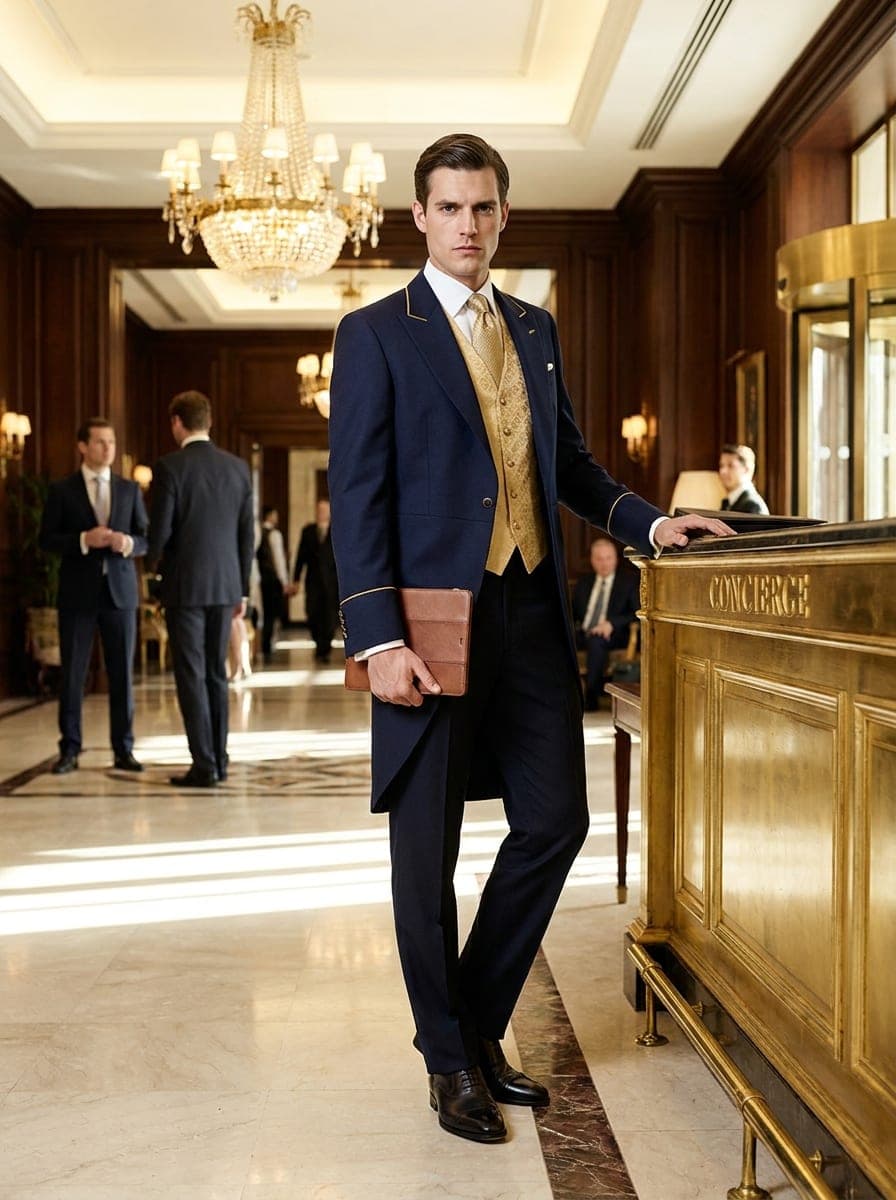
The Art of Receiving
Before a word is exchanged, a welcome has already been decided. It lives in a door held half a second early, in a name remembered but never written down, in a voice that lowers to make room for another. This is hospitality understood not as performance, but as a discipline of attention.
The Threshold
Every arrival begins at a threshold, and the threshold is where reception is won or lost. The door held open a half-second before it is needed, not flung, not hurried, simply present, tells the arriving guest that they were expected. There is a grammar to this. The body turns slightly inward, an invitation rather than a barrier. The gaze meets, then yields. The hand gestures the way without commanding it. A faultless reception never announces itself; it removes friction so quietly that the guest crosses into ease without noticing the work that made it possible. The threshold, well kept, is the first sentence of a long courtesy.
The Memory That Was Never Written
Anticipation is the quietest form of regard. The concierge who recalls a preferred hour, a particular silence, a small aversion never spoken aloud: this is not a feat of administration but of attention sustained over time. The finest reception is built from what was observed and never recorded, held in the discreet ledger of memory rather than on a card. To anticipate is to spare the guest the small indignity of asking twice. It is a savoir-faire learned slowly, in which listening outranks speaking and the well-timed absence of a gesture matters as much as its presence. Anticipation, practised with discretion, lets a guest feel known without ever feeling watched.
What Attire Prepares
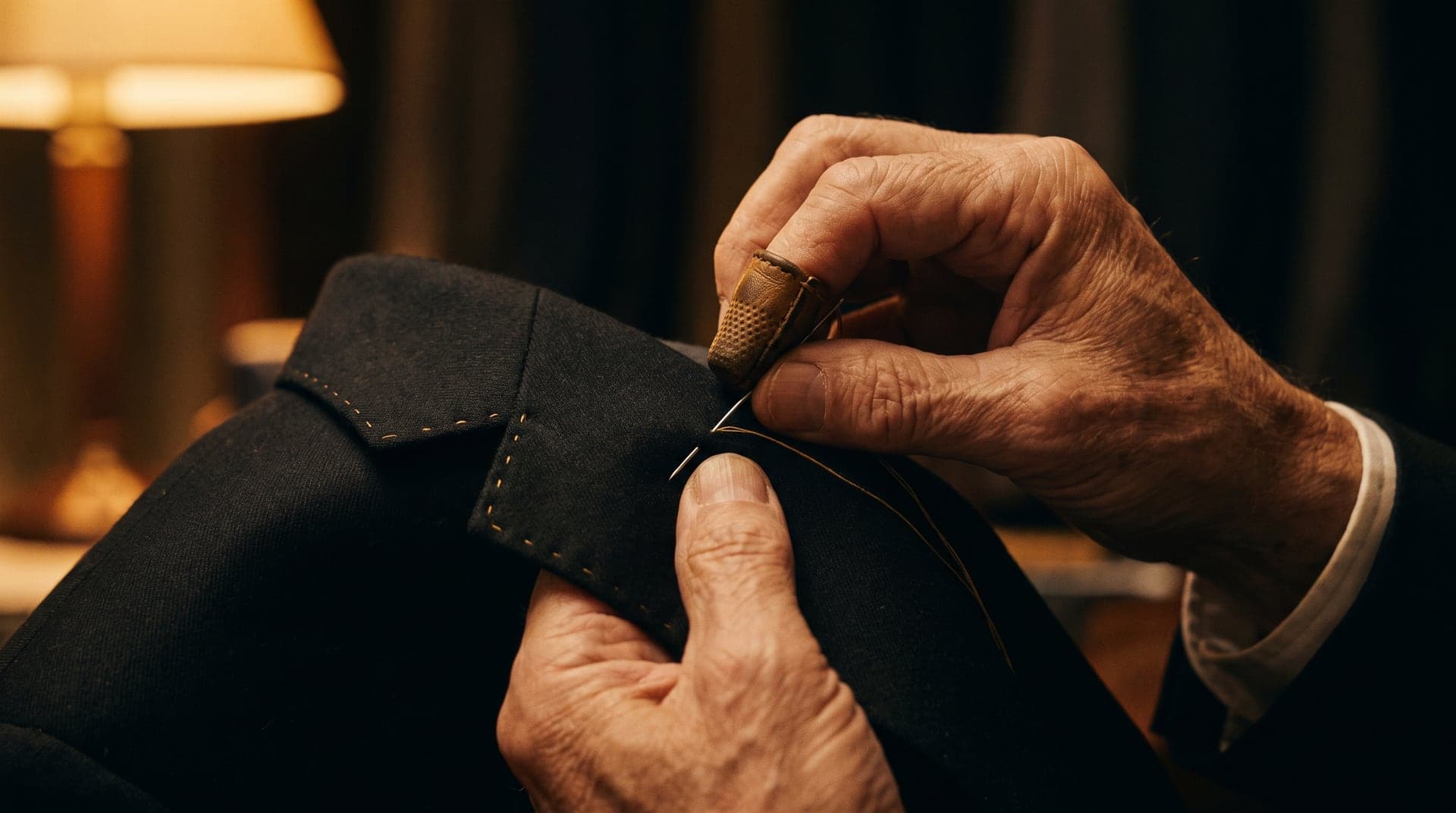
The gesture of welcome is dignified by what precedes it, and dress is its quiet preparation. An attire cut to haute mesure does not draw the eye; it composes the bearing. A collar that sits true, a line that follows the shoulder without strain, a cloth that moves as the body moves, these grant the wearer the stillness from which a faultless reception flows. One who is at ease in their attire need not adjust, fidget, or reassert themselves; they may give their whole attention to the guest. This is the discipline of the grande remise: the garment readies the gesture, and the gesture, so prepared, never asks to be admired.
« A welcome is not what one says at the door, but what one has already decided long before the door is reached. »
Hospitality, at its highest, leaves no trace of effort. It is a craft of thresholds and silences, of memory and measured cloth, in which the finest work is the work the guest never sees. To receive well is to make another feel, for a moment, entirely expected. This carnet is offered in that spirit, by FFGR & IFGR.